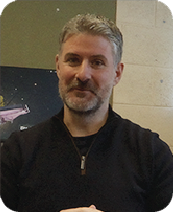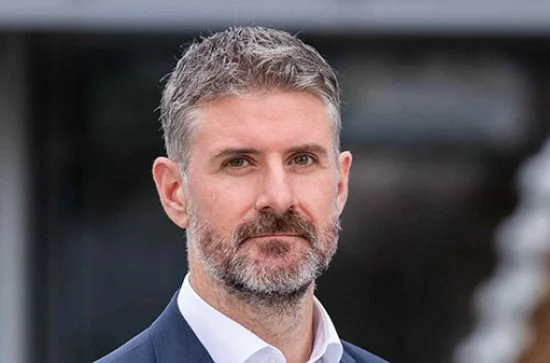
Dr. Patrick Kavanagh
Award Winning Astrophotographer
Battling Cork's Light Polluted Skies
Paddy Kavanagh is a Wicklow man of humble origins, yet he may be the very person to be first to see closest to the Big Bang we’ve ever seen, certainly he is the first to see images of the universe no one else in the world has ever seen from the Mid Infrared Range Instrument he helped develop on the James Webb Space Telescope, and its software.
Paddy has been involved in Amateur and Professional astronomy his entire life; from very humble beginnings in his back garden in Arklow, Co. Wicklow, to Mission Control and post-launch commissioning of the JWST, getting us the closest we’ve ever been to the start of the universe. Not bad for a guy that used to work in a small-town nightclub.
"It really was that feeling, that I just, I couldn't believe that these things (planets) are just sitting over everybody's heads all of the time, and I suppose even though I was a physics student at the time I suppose it really made me think, what's beyond them, you know!"
Dr. Patrick Kavanagh Astrophysicist and JWST MIRI Director
Paddy at Work
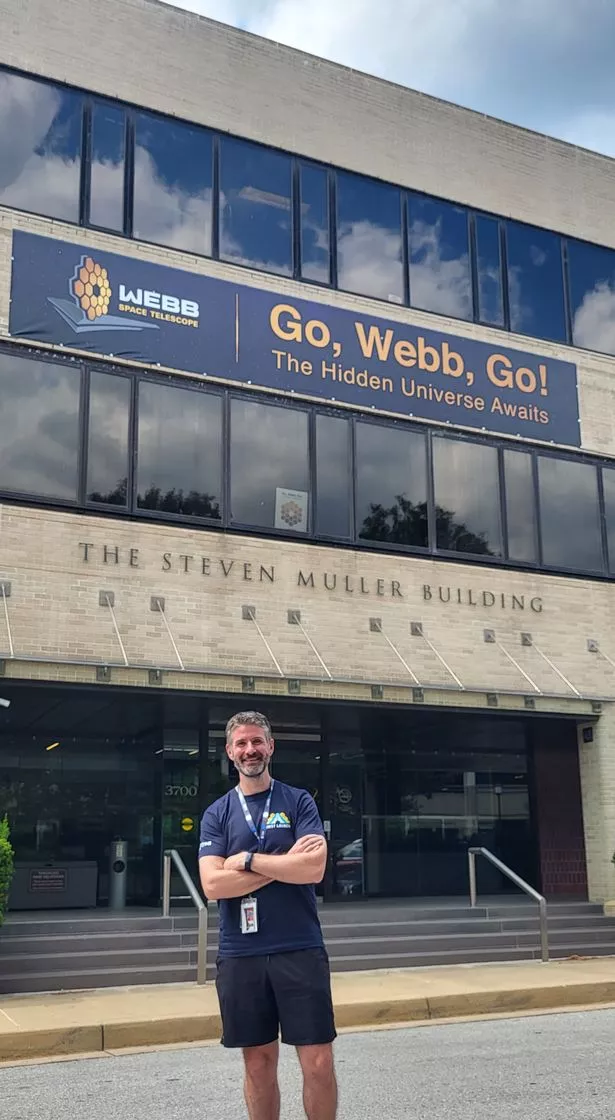
Launching JWST
Dr. Patrick Kavanagh outside the Steven Muller Building, Space Telescope Auditorium in Baltimore working on the JWST MIRI and its softare.
Paddy will be the first person to see the farthest back in time and closest to the big bang before anyone in the world, what an incredible feat for a small-town Wicklow man.
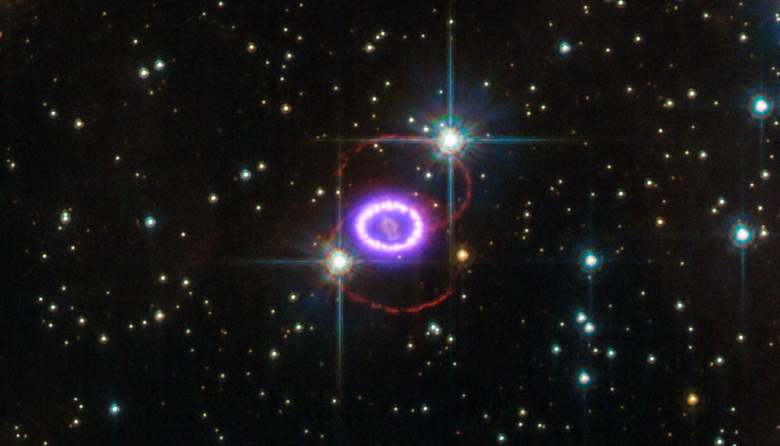
Supernova 1987a
Paddy's favourite object to observe as he would have seen it through the Chandra X-Ray Telescope.
SN 1987A was a type II supernova in the Large Magellanic Cloud, a dwarf satellite galaxy of the Milky Way. Light and neutrinos from the explosion reached Earth 168,000 light years away on February 23, 1987, and it was designated "SN 1987A" as the first supernova discovered that year.
It was the first supernova that modern astronomers were able to study in great detail, and its observations have provided much insight into core-collapse supernovae.
Book Your Tickets to Watch "Die Hard Astro"
More Cast Bios

BOOK YOUR TICKET